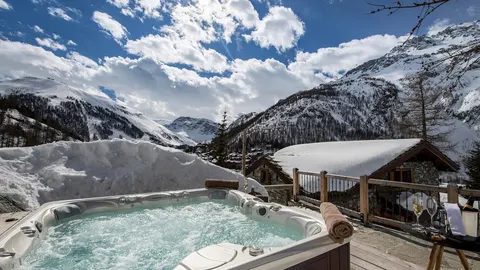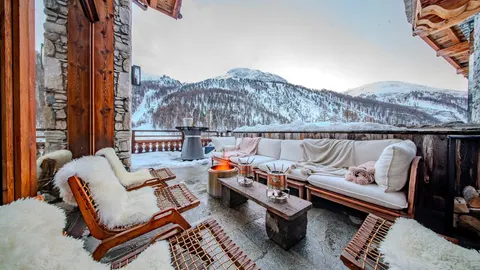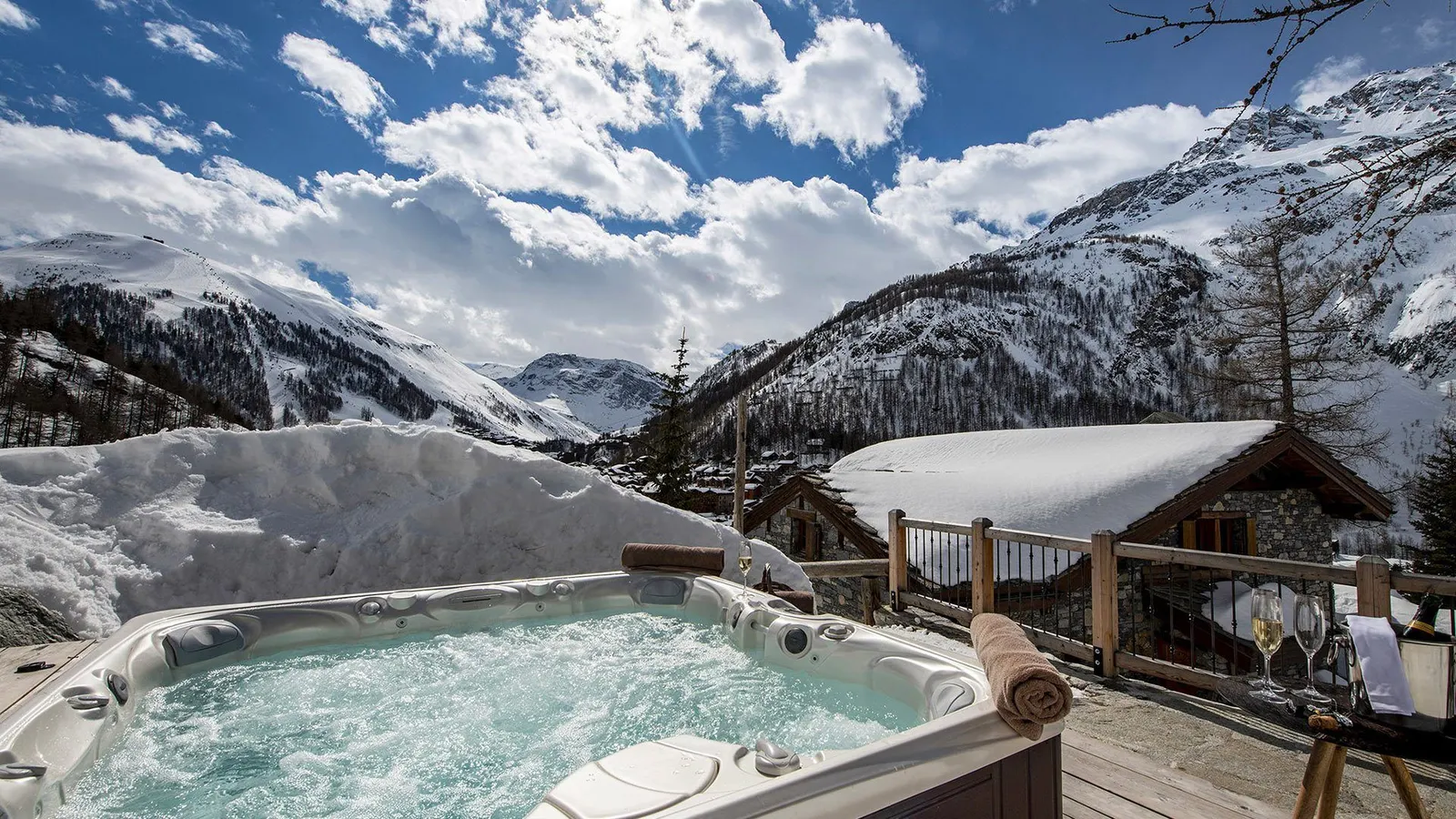
Val d'Isère stands at about 1850 m at the head of the Tarentaise valley, close to the Italian border. Unlike many high French resorts it grew from an old village, and the centre, rebuilt in stone and timber around its old church, has kept a human scale. It is known above all for the quality of its skiing and for a long season.
The skiing
Val d'Isère shares its ski area with Tignes; together they offer about 300 km of pistes, much of it at high altitude, with a glacier at each end. The area is famous among strong skiers: the Face de Bellevarde, used for men's races of the 1992 Olympics and for the World Cup each December, drops straight to the village, and the off-piste, with a guide, has a great reputation. Beginners are not forgotten, with nursery slopes in the village and a gentle beginner area high on Solaise, but the runs back down to the resort are steeper than their colour suggests, and many people ride the lift down at the end of the day.
The village
The main street is lined with good shops and restaurants, and the standard of cooking, both in the village and on the mountain, is high. Après-ski is lively, starting on the slopes in the afternoon. For days off there is a large sports and swimming centre, ice driving, dog sledding and winter walking paths.
Getting there
Val d'Isère is at the end of the road, which makes the transfer longer than for most resorts: about three hours from Geneva or Lyon, about two hours from Chambéry. The nearest station is Bourg-Saint-Maurice, around 30 km down the valley, served by high-speed trains.
When to go
The season is long, usually from late November to early May. Snow is reliable throughout because of the altitude. Late March and April bring long sunny days with good snow high up.
Who it suits
Confident intermediates and experts, groups of friends, and anyone who wants a lively village with serious skiing at the door.