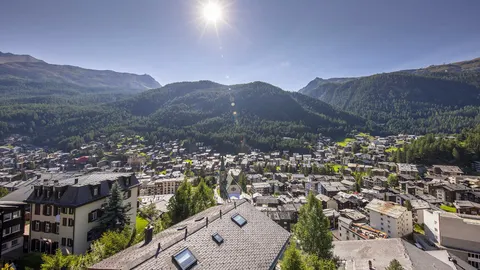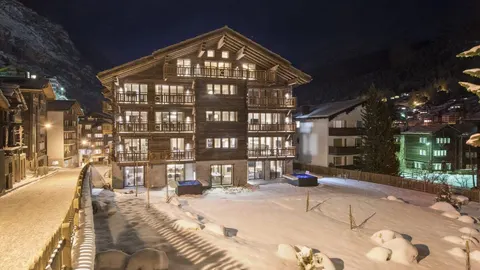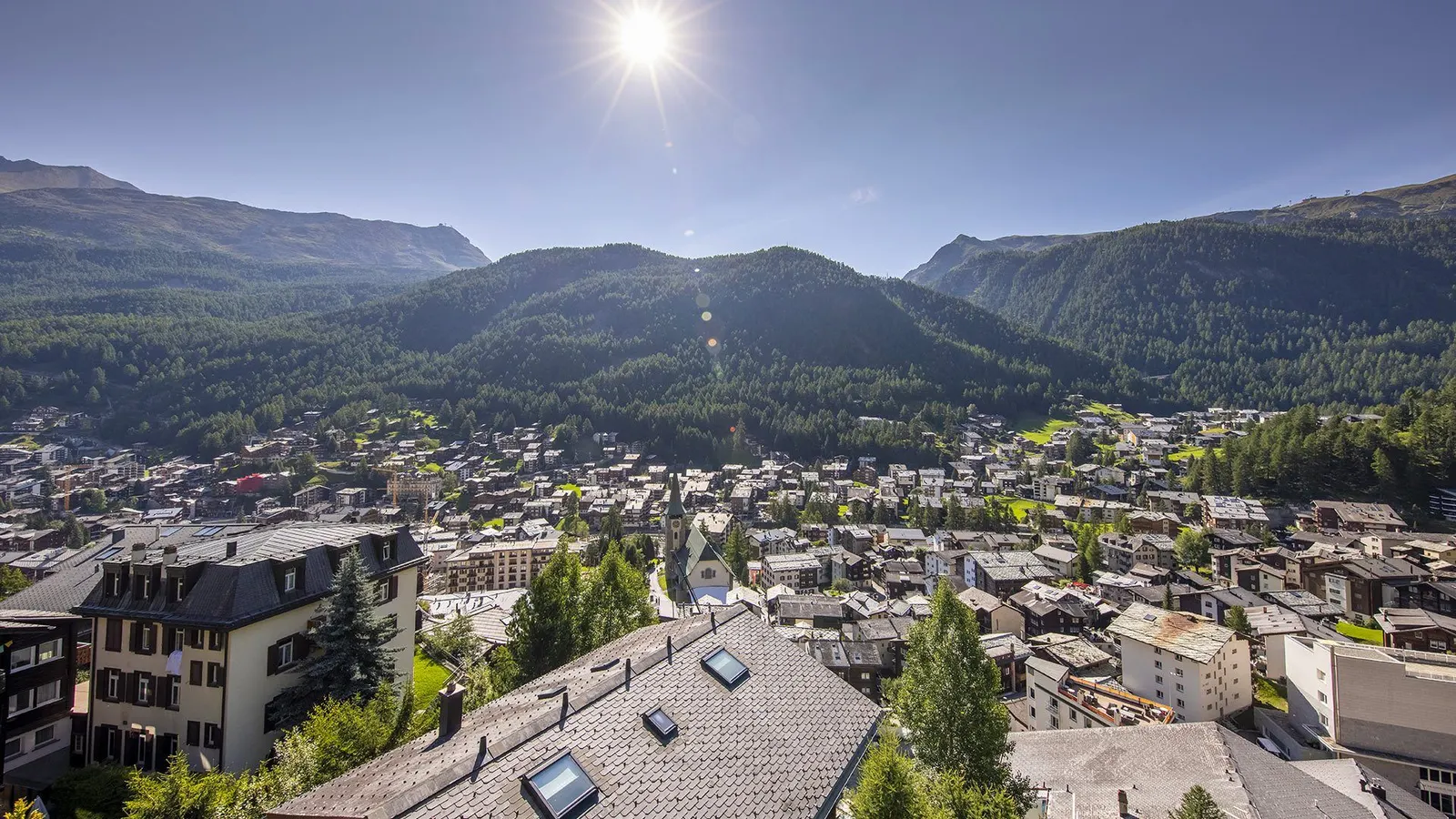
Zermatt lies at about 1620 m at the end of the Mattertal in Valais, beneath one of the most recognisable mountains in the world. No private cars enter the village: visitors arrive by train, and small electric vehicles and horse-drawn carriages do the rest. Old wooden barns on stone stilts stand between hotels that have welcomed climbers and skiers since the nineteenth century.
The skiing
The ski area is among the highest in the Alps, reaching 3883 m at Matterhorn Glacier Paradise, on the Klein Matterhorn, and is linked with Cervinia and Valtournenche in Italy, for about 360 km of pistes in all. It is divided into three sectors: Sunnegga and Rothorn, reached by an underground funicular; Gornergrat, served by a rack railway with a famous view; and Schwarzsee with Matterhorn Glacier Paradise. The skiing suits intermediates and experts best, with long runs and a great vertical drop. Snow cover is dependable through the winter. Lunch is an event in itself: the hamlets of Findeln and Zum See hold a series of small restaurants with terraces facing the Matterhorn.
The village
The Bahnhofstrasse runs from the station through the centre, lined with shops, cafés and hotels. The Matterhorn Museum tells the story of the first ascent in 1865. There are spas, an ice rink, many kilometres of winter walking paths and a wide choice of bars and restaurants.
Getting there
Trains run to Zermatt from Zurich airport in about three and a half hours and from Geneva airport in about four, with a change at Visp. Drivers leave the car at Täsch, 5 km below, and take the shuttle train for the last stretch.
When to go
The whole area is usually open from late November to mid or late April, and the glacier side for longer, into early May. Because of the altitude, both early and late season are dependable. February and March are the busiest months.
Who it suits
Skiers who want long, scenic runs and good food on the mountain, couples, and anyone who wishes to see the Matterhorn from the window.